
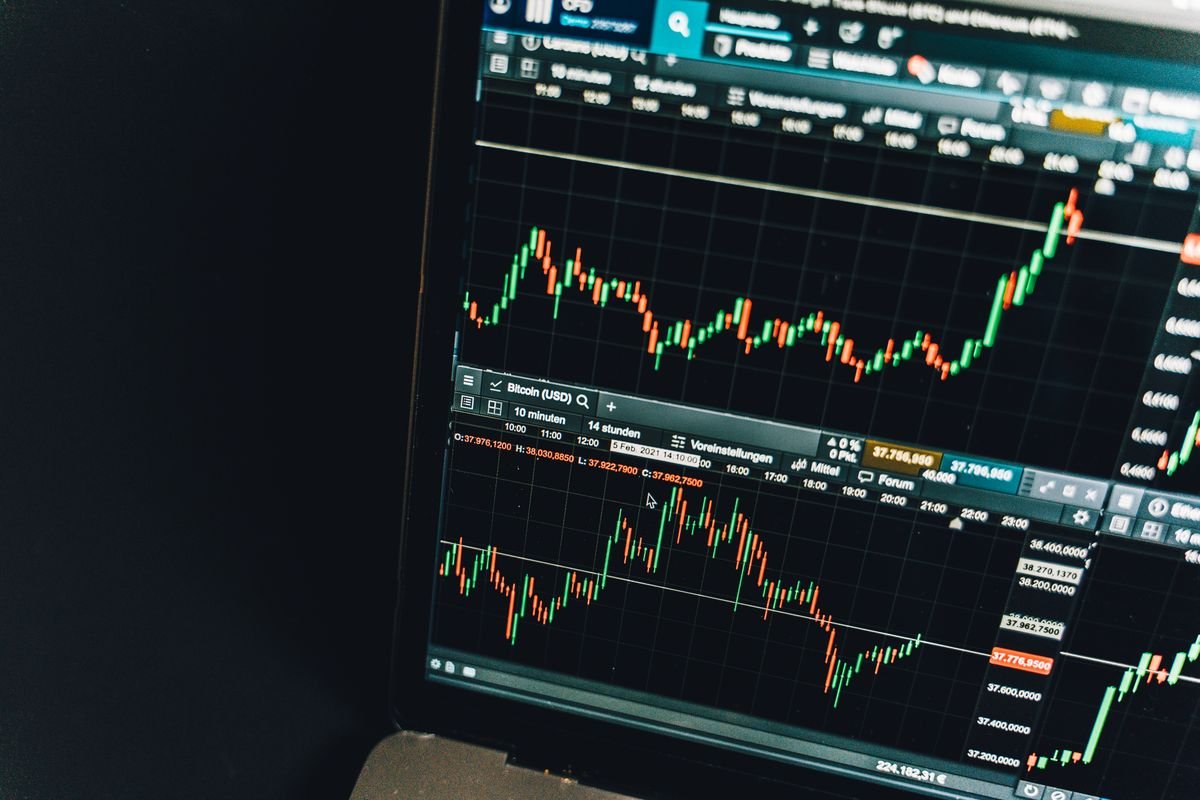
The most consequential question in crypto tax is not which rate applies. It is whether you are an investor or carrying on a trade. An investor pays Capital Gains Tax at 18% or 24% on realised gains. A trader pays Income Tax at up to 45% plus National Insurance on profits, but can set losses against other income and deduct expenses. HMRC's published position at CRYPTO20250 is that it will be exceptional for an individual buying and selling cryptoassets to be treated as carrying on a trade.
Volume does not settle it. Nor does calling yourself a trader, or using leverage, or doing it full time. The test is the badges of trade, applied to the whole picture.
Every crypto transaction, and how the UK taxes it
| What you did | Usual UK treatment | Watch for |
|---|---|---|
| Buying crypto with sterling | Not a taxable event. It creates base cost in the section 104 pool | Fees are added to cost |
| Holding | Not a taxable event | No wealth tax in the UK |
| Moving tokens between your own wallets | Not a disposal | The single most common cause of an overstated gain |
| Selling for fiat | Disposal — CGT | £50,000 proceeds reporting test |
| Swapping one token for another | Disposal at sterling market value — CGT | Taxable even though no cash was received |
| Spending crypto on goods or services | Disposal at market value — CGT | Applies to a coffee as much as a car |
| Paying a fee in tokens | Disposal of those tokens — CGT | Material across high transaction volumes |
| Gifting to anyone other than a spouse or civil partner | Disposal at market value — CGT, even though you received nothing | Catches gifts to children and friends |
| Transferring to a spouse or civil partner | No gain, no loss — they inherit your base cost | A legitimate way to use two annual exempt amounts |
| Donating to a registered charity | Generally no gain, no loss | Anti-avoidance applies to tainted donations |
| Margin and leveraged spot trading | Usually CGT on each closed position; interest and funding costs are generally not allowable against capital gains | Liquidations are disposals too |
| Futures, perpetual swaps and options | Usually CGT on the contract as an asset for an investor; income if the activity amounts to a trade | Complex, and highly fact-dependent |
| Spread betting with a UK-regulated firm | Outside CGT as gambling — and losses are correspondingly not allowable | Do not confuse with CFDs, which are within CGT |
| Automated or bot trading | Same analysis as manual trading; automation alone does not create a trade | Enormous transaction counts make reconciliation the real issue |
| Memecoins and low-liquidity tokens | Ordinary CGT treatment | Sterling valuation is the hard part; document your source |
| Token launches, IDOs and presales | Acquisition at cost; disposal on sale. Allocations received for work or services are income | Why you received it decides the tax |
| Play-to-earn and in-game rewards | Generally income on receipt where earned for activity, then CGT on later disposal | Two taxes on one token, at two different dates |
| Being paid a salary or fee in crypto | Employment or trading income. Where the tokens are readily convertible assets, PAYE and National Insurance apply | Employer obligations, not just the recipient's |
| DAO participation and governance rewards | Fact-dependent. Rewards for contribution are generally income; the DAO's own status is unsettled | Little published HMRC guidance |
| Wrapping, bridging and cross-chain moves | Turns on whether beneficial ownership changed. Frequently treated as a disposal | Position is genuinely unsettled — document your reasoning |
Deeper treatment of the yield-bearing categories is on our staking, mining, DeFi and liquidity and airdrop, fork and NFT pages.
Is crypto trading gambling?
No, and it is worth being clear about this because the belief is widespread and expensive. HMRC's published view, at CRYPTO10450 of the Cryptoassets Manual, is that it does not consider the buying and selling of cryptoassets to be the same as gambling. Gains are therefore within the charge to tax, and by the same token losses are allowable.
The exception is genuine spread betting through a UK-regulated firm, which is a betting transaction and sits outside Capital Gains Tax. The trade-off is symmetrical: spread betting losses cannot be claimed either. Contracts for difference are not spread bets and are within CGT.
The badges of trade, applied to crypto
Whether activity amounts to a trade is decided on the badges of trade, drawn from case law and summarised by HMRC in its Business Income Manual. Applied to cryptoassets, the ones that carry weight are:
- Frequency and number of transactions. Relevant, but on its own not decisive. Bots generate volume without generating a trade.
- Profit-seeking motive. Weak as a signal, since every investor has one.
- Length of ownership. Very short holding periods point towards trading.
- Supplementary work. Doing something to the asset to make it more marketable. Rare in crypto, which is why trader status is rare.
- Organisation. Whether the activity is carried on in the manner of a business, with systems, records, premises or staff.
- Source of finance. Borrowing that has to be serviced from sales proceeds points towards trading.
- The nature of the asset. Cryptoassets produce no income and give no personal enjoyment, which weakens the investment argument, but does not by itself create a trade.
Which is better, investor or trader?
It is not a choice, it is a conclusion. But understanding the consequences shows why HMRC's answer is sometimes not the one people assume they want.
| Investor | Trader | |
|---|---|---|
| Tax on profits | CGT at 18% or 24% | Income Tax at 20%, 40% or 45% |
| National Insurance | None | Class 4 applies. Class 2 has not been payable by the self-employed since 6 April 2024, though contributions above the small profits threshold are treated as paid for benefit purposes |
| Annual allowance | £3,000 annual exempt amount | Personal allowance and the £1,000 trading allowance |
| Expenses | Only s.38 TCGA 1992 allowable costs | Wholly and exclusively incurred business expenses, including some interest and equipment |
| Losses | Against capital gains only; carried forward if claimed | Can be relieved against other income, subject to restrictions |
| Matching rules | Section 104 pooling, same-day, 30-day | Stock valuation basis instead |
For someone with large gains, investor treatment is usually far better. For someone with sustained losses and other income, trader treatment can be worth having. Neither is elective, and adopting the wrong one is exactly the sort of thing an HMRC enquiry is opened to test.
What about a company?
Companies are outside all of this. A company holding cryptoassets is generally within the loan relationship or chargeable gains rules depending on the asset and purpose, pays corporation tax on profits, and has no annual exempt amount. Incorporating an existing personal portfolio is itself a disposal at market value. See crypto tax for limited companies.
Frequently asked questions
Am I a crypto trader or an investor for tax purposes?
Almost certainly an investor. HMRC's published view is that it will be exceptional for an individual buying and selling cryptoassets to be carrying on a trade. The badges of trade are applied as a whole, and high transaction volume on its own, including from bots, does not create one. If your position is genuinely borderline it should be documented and defended, not assumed.
Is crypto trading taxed as gambling in the UK?
No. HMRC's published position at CRYPTO10450 is that it does not consider buying and selling cryptoassets to be the same as gambling, so gains are taxable and losses are allowable. Genuine spread betting through a UK-regulated firm is different and sits outside Capital Gains Tax, but the losses are not allowable either. CFDs are not spread bets and are within CGT.
How are crypto futures and perpetual swaps taxed?
For an investor, each closed position is generally a disposal within Capital Gains Tax, with the contract treated as an asset. If the activity amounts to a trade the profits are income instead. Funding payments and interest on leverage are generally not allowable against capital gains, which is one of the sharper differences between the two treatments.
Do I pay tax if I spend crypto rather than sell it?
Yes. Using tokens to buy goods or services is a disposal at their sterling market value on the day, so a gain or loss arises against your pooled cost. The size of the purchase is irrelevant.
Is gifting crypto to my children taxable?
Yes, for you. A gift to anyone other than a spouse or civil partner is a disposal at market value, so you can owe capital gains tax on a transaction that produced no cash. Transfers between spouses and civil partners are on a no gain, no loss basis, and the recipient takes over your base cost. Gifts can also have inheritance tax consequences.
Can I deduct my trading losses against my salary?
Only if you are genuinely trading, which is rare. As an investor, capital losses can be set only against capital gains, in the same year first and then carried forward if claimed. Losses must be claimed to be usable, generally within four years of the end of the tax year in which they arose.
How are memecoin gains taxed?
Exactly like any other exchange token: section 104 pooling with same-day and 30-day matching, and CGT on disposal. The practical difficulty is valuation, because thin liquidity makes the sterling value at the moment of a swap contestable. Record your price source and apply it consistently.
Is bridging or wrapping a token a disposal?
The position is genuinely unsettled and turns on whether beneficial ownership of the original asset changed. Many wrapping and bridging mechanisms are treated conservatively as disposals. Where the analysis is arguable, the important thing is to reach a reasoned position, document it, and apply it consistently rather than silently.
Does bot or algorithmic trading change my tax position?
Not by itself. Automation is a method, not a badge of trade, and the same investor or trader analysis applies. What it does change is the practical burden: hundreds of thousands of transactions make correct pooling, same-day and 30-day matching impossible by hand and difficult even for good software.
Reviewed by TaxDigit’s ACCA-qualified team. About our team.
This page is general guidance on UK tax law as at 10 August 2026 and is not advice for any particular case. The tax treatment of derivatives, wrapping, bridging and DAO participation is fact-dependent and in several areas unsettled. HMRC's internal manuals are guidance for HMRC staff, are not law, and do not bind HMRC in an individual case. Reviewed by the TaxDigit crypto tax team. Updated August 2026.
Get crypto clarity
Book a free, no-obligation consultation with a chartered certified accountant today.
Book a Consultation