TaxDigit

Full expensing is a generous capital allowances measure that lets companies deduct the cost of qualifying plant and machinery in full, in the year of purchase. For businesses investing in equipment, it can significantly accelerate tax relief.

Full expensing capital allowances advice on plant and machinery from TaxDigit

How Full Expensing Works

Under full expensing, companies can claim a 100% first-year allowance on qualifying new main-rate plant and machinery. Instead of spreading relief over several years, the entire cost is deducted from taxable profits straight away, improving cash flow.

What Qualifies?

Full expensing generally applies to new and unused main-rate plant and machinery bought by companies. A separate first-year allowance covers certain special-rate assets. Cars and items bought to lease are usually excluded, so eligibility should be checked.

Points to Watch

Because relief is given upfront, disposing of an asset later can trigger a balancing charge. Timing of expenditure and the type of asset both affect the benefit, so planning matters.

How TaxDigit Can Help

Our Guildford-based team helps companies use full expensing and other capital allowances effectively. Contact us to plan your investment tax-efficiently.

Full Expensing: UK-Wide Capital Allowances Support

Full expensing benefits companies investing in equipment right across the United Kingdom, not just those near our Guildford head office. TaxDigit helps companies UK-wide make the most of full expensing and the wider capital allowances available on their spending.

Our chartered certified accountants identify qualifying plant and machinery, apply the right allowance and plan the timing of investment for the best tax outcome. We support clients UK-wide, both remotely and from our Guildford office.
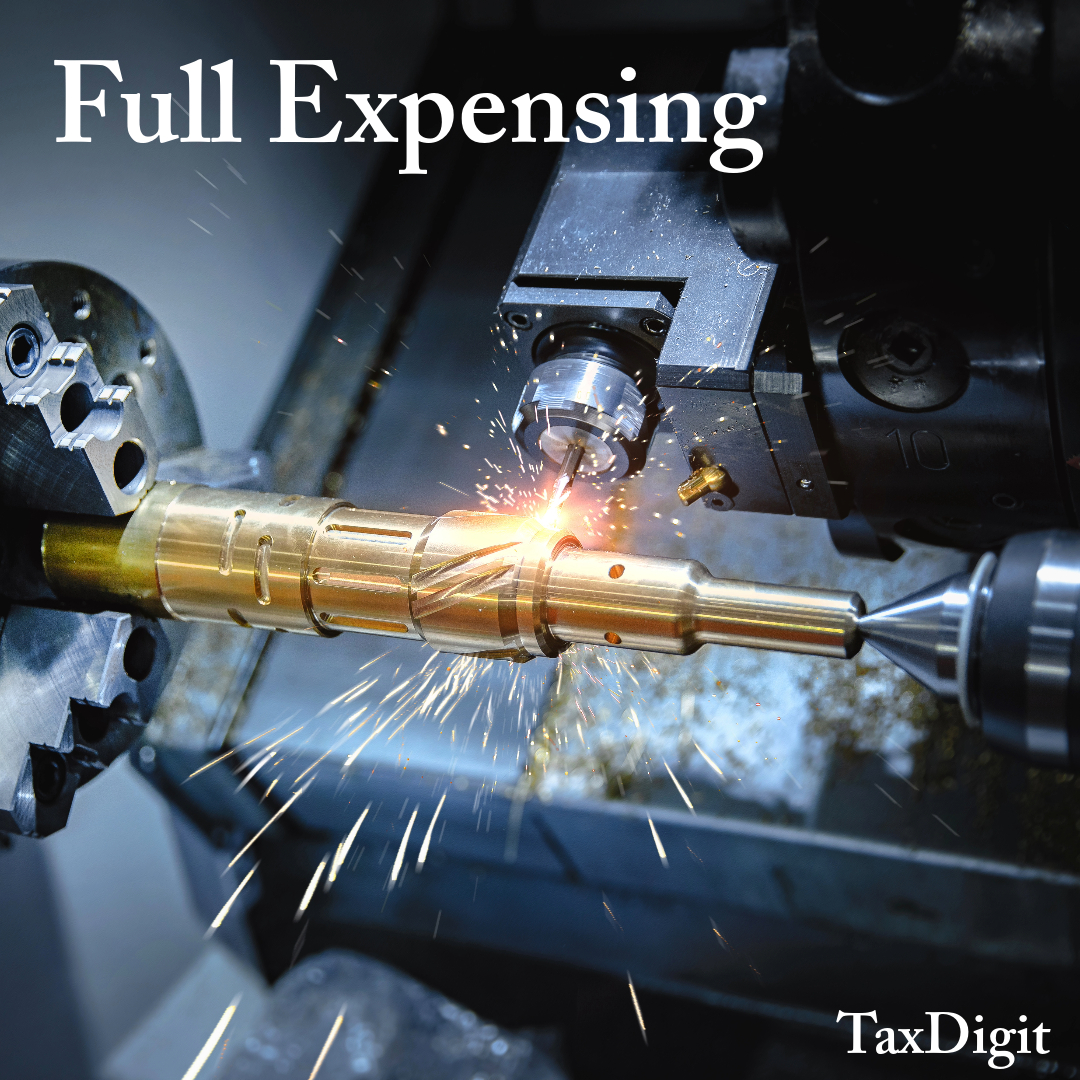
Full expensing is generous, but it does not apply to everything. Cars, assets bought to lease out and certain second-hand or connected-party purchases are treated differently, and disposals later on can trigger a balancing charge. We make sure each item is allocated to the correct allowance, including the annual investment allowance and special rate pools, so your claim is both maximised and accurate.

How we help with full expensing

  • Identifying expenditure that qualifies for full expensing
  • Coordinating full expensing with the annual investment allowance
  • Planning the timing of capital investment for tax efficiency
  • Handling balancing charges on the disposal of assets
  • Allocating costs correctly between main and special rate pools

HMRC explains the measure here: HMRC guidance on capital allowances full expensing.

Frequently Asked Questions

What is full expensing?
Full expensing lets companies deduct the full cost of qualifying new plant and machinery from their profits in the year of purchase, rather than spreading the relief over several years.

What does not qualify for full expensing?
Cars, assets bought for leasing and certain second-hand or connected-party purchases generally do not qualify, though other capital allowances may still apply.

Can TaxDigit help if I am not based in Guildford?
Yes. We advise on full expensing and capital allowances for clients UK-wide, remotely and from our Guildford office.
Capital Gains Tax can take a significant bite out of the proceeds when you sell an asset or a business, but valuable reliefs can reduce the bill. Two of the most important are rollover relief and Business Asset Disposal Relief.

Capital Gains Tax rollover relief and Business Asset Disposal Relief planning by TaxDigit

Capital Gains Tax Basics

Capital Gains Tax is charged on the profit when you dispose of certain assets. The gain, rather than the full sale price, is taxed, and the rate depends on the asset and your circumstances. Reliefs and the annual exempt amount can reduce what is due.

Rollover Relief

Rollover relief allows the gain on the disposal of certain business assets to be deferred where the proceeds are reinvested in new qualifying assets. The gain is effectively rolled into the new asset, postponing the tax until a later disposal.

Business Asset Disposal Relief

Business Asset Disposal Relief can reduce the Capital Gains Tax rate on qualifying business disposals, subject to a lifetime limit and conditions that must be met for a minimum period beforehand. Early planning helps secure it.

How TaxDigit Can Help

Our Guildford-based team helps clients minimise Capital Gains Tax using reliefs such as Business Asset Disposal Relief. Get in touch before you sell.

Business Asset Disposal Relief: UK-Wide Support from TaxDigit

Capital Gains Tax reliefs such as rollover relief and Business Asset Disposal Relief matter to business owners across the United Kingdom, not only those near our Guildford head office. TaxDigit advises clients UK-wide, from sole traders and family companies to growing groups, on how to defer or reduce the tax due when they sell business assets or exit a company.

Our chartered certified accountants help you check the conditions, time the disposal and structure the sale so that the maximum relief is secured. We support clients remotely and on-site, wherever they are based in the UK.

How we help with Business Asset Disposal Relief

  • Reviewing whether a disposal qualifies for Business Asset Disposal Relief and the lifetime limit
  • Checking the minimum ownership and trading conditions are met well before a sale
  • Applying rollover relief where proceeds are reinvested in new qualifying business assets
  • Calculating the Capital Gains Tax due and the saving from each available relief
  • Coordinating the disposal with your wider personal and corporation tax position

For the official position, HMRC sets out the rules in detail in its guidance: HMRC Business Asset Disposal Relief guidance.

Frequently Asked Questions

What is Business Asset Disposal Relief?
Business Asset Disposal Relief reduces the rate of Capital Gains Tax on qualifying disposals of all or part of a business, subject to a lifetime limit and conditions that must be met for a minimum period beforehand.

How is rollover relief different from Business Asset Disposal Relief?
Rollover relief defers a gain when proceeds are reinvested in new qualifying assets, while Business Asset Disposal Relief reduces the tax rate on a qualifying business disposal. The two can apply to different transactions in your planning.

Can TaxDigit help if I am not based in Guildford?
Yes. We act for clients UK-wide and provide Capital Gains Tax and Business Asset Disposal Relief advice remotely as well as from our Guildford office.

The differences in tax treatment for companies and individuals are fundamental to how businesses are structured in the UK. Whether you operate as a sole trader or through a limited company can significantly change how much tax you pay and when.

Differences in tax treatment for companies and individuals in the UK explained by TaxDigit

How Companies Are Taxed

A limited company pays Corporation Tax on its profits. Owners then extract money as salary or dividends, each taxed differently in their hands. This separation between the company and its owners is central to the tax treatment for companies and individuals.

How Individuals Are Taxed

Sole traders and partners are taxed personally on their business profits through self assessment, paying income tax and National Insurance on the whole profit, whether or not they withdraw it. There is no separate layer of company tax.

Key Practical Differences

The differences extend to losses, allowable expenses, payment timing and administration. Companies offer flexibility over when and how profits are drawn, while sole traders enjoy simpler reporting. The best structure depends on profit levels and personal goals.

How TaxDigit Can Help

Our Guildford-based team helps clients understand the tax treatment for companies and individuals and choose the right structure. Get in touch for tailored advice.

Tax Treatment for Companies and Individuals: UK-Wide Support from TaxDigit

The differences in tax treatment for companies and individuals affect business owners right across the United Kingdom, not only those near our Guildford head office. TaxDigit advises clients UK-wide, from new sole traders to established limited companies, on the structure that keeps their overall tax bill as low as the rules allow while staying fully compliant.

Our chartered certified accountants compare the Corporation Tax, income tax, National Insurance and dividend position for each option so you can make an informed choice. We support clients remotely and on-site, wherever they are based in the UK.

How we help with tax treatment for companies and individuals

  • Comparing sole trader, partnership and limited company tax positions for your profit level
  • Modelling the salary versus dividend mix to extract profit efficiently
  • Reviewing whether incorporation or disincorporation would reduce your overall tax
  • Planning for losses, allowable expenses and the timing of tax payments
  • Keeping your reporting compliant with Corporation Tax and self assessment deadlines

If you are choosing or changing your structure, our guidance on business disposal also shows how the structure affects tax when you eventually sell or exit. For the official position, HMRC explains the rules for each business type in its guidance: HMRC guidance on setting up a business.

Because the right answer changes as your profits grow, many of our clients revisit the question every year or two. A structure that suited a side business on modest profits may become inefficient once earnings rise, and incorporating at the right moment can protect more of your income while keeping you compliant. We map out the figures clearly, including the combined effect of Corporation Tax, dividend tax and National Insurance, so you can see the real take-home impact of each route before making a decision across your UK business.

Frequently Asked Questions

What is the main difference in tax treatment for companies and individuals?
A limited company pays Corporation Tax on its profits and owners are taxed separately on salary or dividends, while sole traders and partners pay income tax and National Insurance personally on all business profits.

Is a limited company always more tax-efficient than being a sole trader?
Not always. The best structure depends on your profit level, how much you need to draw, and your long-term plans, which is why tailored advice is worthwhile before you decide.

Can TaxDigit help if I am not based in Guildford?
Yes. We act for clients UK-wide and advise on the tax treatment for companies and individuals remotely as well as from our Guildford office.